



What if your recovery team could see a relapse coming before you felt it yourself?
Not a hunch. Not a check-in call that happened to catch you on a bad day. But a data-driven, real-time signal — generated by your own body — that tells your clinical team that something is shifting, hours or even days before a conscious urge to use emerges.
This isn’t a future concept. It’s happening right now at Hygea Health in Maryland, through Huml Health — an innovative platform developed by Hygea’s own founders that is quietly changing what aftercare looks like for people in recovery.
The Problem With Traditional Aftercare
For decades, the standard model of addiction aftercare has looked roughly the same: complete a treatment program, attend weekly therapy sessions, go to support group meetings, and check in with a counselor periodically. It’s a passive system — one that relies on the person in recovery to report how they’re doing, show up consistently, and reach out when things get hard.
The problem is that this model asks the most of people at precisely the moment they have the least to give. The period immediately following discharge from a residential program is one of the highest-risk windows in recovery. Stress levels are high, familiar triggers reappear, the structure of treatment is gone, and the neurological changes that drive cravings don’t disappear when a person walks out the door.
Traditional aftercare, at its best, catches problems after they’ve already surfaced. By the time a person calls their counselor to say they’re struggling, the relapse process has often already been underway for days.
At Hygea Health, we recognized that recovery deserves better than that. Which is why Hygea’s founders developed Huml Health — a smarter, more proactive system of support built from the ground up by the same people who built Hygea.
What Is Huml Health?
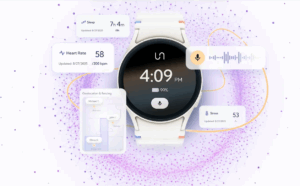
Huml Health — which stands for Human Understanding Markup Language — is a revolutionary platform and wearable technology designed specifically for addiction recovery and behavioral health. It creates a continuous, data-driven connection between the person in recovery and their clinical care team that extends far beyond the walls of treatment.
At its core, Huml operates on a simple but powerful insight: the body signals distress before the conscious mind does. Changes in sleep patterns, heart rate variability, resting heart rate, and activity levels often precede a relapse — sometimes by hours, sometimes by days — long before a person is aware that they’re in danger.
Huml’s technology listens to those signals.
How It Works: Three Phases of Proactive Recovery
Phase 1 — Establishing Your Baseline During Treatment
Every Hygea patient who participates in the Huml program receives a comfortable, discreet smart watch upon admission. This watch is worn 24/7 and begins collecting data immediately — tracking sleep quality and patterns, heart rate variability (HRV), resting heart rate, stress indicators, and physical activity levels.
Over the first weeks of treatment, the system learns each patient’s unique, healthy baseline. Not a generic average — your specific, individual markers of wellbeing during a period of clinical stability. This personalized baseline becomes the reference point against which all future data is measured.
This matters because what counts as a significant deviation looks different for every person. Huml’s AI is calibrated to you — not to a statistical norm.
Phase 2 — Continuous Monitoring After Discharge
This is where Huml truly changes the aftercare equation. After a patient is discharged from Hygea’s residential program, the watch continues to do its job. There’s no manual input required — no daily check-ins, no self-reporting. The patient simply wears the watch, lives their life, and the data flows continuously to Huml’s secure, HIPAA-compliant platform.
The watch is durable, water-resistant, and designed to be worn comfortably around the clock. It tracks four key health markers:
Sleep Quality and Patterns — Chronic sleep disruption is one of the most reliable precursors to relapse. Insomnia, fragmented sleep, and persistent fatigue increase emotional dysregulation, lower impulse control, and heighten craving intensity. When Huml detects sustained sleep disruption, it takes notice.
Heart Rate Variability (HRV) — HRV measures the variation in time between heartbeats and is a sensitive indicator of the autonomic nervous system’s balance. Low HRV over consecutive days reliably signals sustained stress, anxiety, or emotional distress — often before the person experiencing it has consciously registered the shift.
Resting Heart Rate (RHR) — An elevated resting heart rate can indicate physical stress, illness, or increasing anxiety — all conditions that raise relapse vulnerability. Tracked over time, changes in RHR tell a story about what’s happening beneath the surface.
Activity and Movement — Sudden drops in physical activity, changes in daily movement patterns, or increasing isolation are behavioral markers that often accompany the early stages of relapse. Huml tracks these shifts in real time.
Phase 3 — Proactive, Compassionate Intervention
Here is where technology and human care come together in a way that genuinely sets Hygea apart.
When Huml’s AI detects a significant deviation from a patient’s personal baseline — a sustained drop in HRV, a pattern of sleep disruption, an elevated resting heart rate over consecutive days — it sends a confidential alert directly to Hygea’s clinical team. This alert arrives often before the patient has experienced a conscious urge to use.
The clinical team then reaches out — not with alarm, but with care. A phone call. A check-in. “The technology has indicated your stress levels have been elevated — how are you doing, and how can we support you right now?” Sometimes that conversation leads to a mindfulness-based session. Sometimes it results in a clinical adjustment to the aftercare plan. Sometimes it simply means knowing that someone is paying attention, and that the support is still there.
This is what Hygea calls proactive, compassionate intervention — and it represents a fundamental shift in what aftercare can mean for people in recovery.
Why This Matters: The Science Behind the Technology
The physiological markers Huml tracks are not arbitrary. They are grounded in a substantial body of research connecting autonomic nervous system dysregulation, sleep disruption, and behavioral changes to addiction relapse.
Heart rate variability in particular has emerged as one of the most promising biomarkers in addiction medicine. Research has linked chronically low HRV to increased craving intensity, reduced capacity for impulse control, and heightened emotional reactivity — precisely the neurological conditions that make maintaining sobriety harder. By tracking HRV continuously, Huml is monitoring one of the body’s most sensitive indicators of recovery stability in real time.
Sleep disruption is equally well-documented as a relapse risk factor. The relationship between sleep and the brain’s reward and stress systems means that poor sleep doesn’t just make recovery uncomfortable — it actively undermines the neurological capacity for the kind of regulated, purposeful decision-making that sobriety requires.
What makes Huml’s approach innovative is not the individual markers — it is the continuous, individualized tracking of all of them together, analyzed by AI against a personal baseline, with a human clinical response built into the system when the data calls for it.
Privacy, Consent, and What Huml Is Not
It’s worth addressing directly: Huml is not a surveillance tool. Every Hygea patient who participates in the program does so with full informed consent, a clear understanding of how their data is used, and the knowledge that their information is protected under a HIPAA-compliant data privacy agreement.
The data collected by Huml is used for one purpose only: confidential clinical intervention on behalf of the patient. It is not shared with employers, insurance companies, legal entities, or anyone outside the clinical team. It exists entirely in service of the person wearing the watch.
Huml is a safety net — one that travels with a patient when they leave treatment and that works quietly in the background to extend the reach of clinical care into the most vulnerable period of recovery.
What This Means for People Considering Treatment at Hygea
One of the most consistent fears people carry when they consider residential addiction treatment is what happens after. The structure, the clinical support, the accountability of being in a program — and then the return to daily life, with all of its triggers and pressures, and a recovery plan that relies primarily on the person themselves to hold everything together.
Huml changes that equation. It means that when a Hygea patient walks out the door at discharge, they are not walking into the unknown alone. They are carrying with them a continuous connection to their clinical team — one that is monitoring for the earliest biological signals of risk and is prepared to respond before a crisis develops.
For people in early recovery, for those with a history of relapse, and for anyone whose life after treatment involves significant stress or high-risk environments, that kind of sustained, data-driven support is not a luxury. It is a meaningful clinical advantage.
Recovery Doesn’t Stop When Treatment Ends
At Hygea Health, we believe that the end of residential treatment is not the end of our responsibility to our patients. It is the beginning of a different kind of care — one that is proactive, personalized, and powered by technology that keeps our clinical team connected to the people they serve long after discharge.
Through Huml Health — developed by Hygea’s own founders — we are able to offer a level of aftercare that goes beyond what traditional models make possible. Combined with our Joint Commission-accredited detox and residential programs, individualized treatment planning, and compassionate clinical team, Huml represents our commitment to giving every patient the best possible chance at lasting recovery.
If you or someone you love is considering treatment and wants to learn more about how Huml Health works at Hygea, we’d love to have that conversation.
Call Hygea Health at (410) 512-9525 or learn more about our innovative technology online — we’re available 24 hours a day, seven days a week.
Hygea Health offers medical detox and residential addiction treatment in Maryland, with locations in Middle River, Camp Meade, and Belair.