



Few topics in addiction medicine are generating more attention right now than psilocybin — the naturally occurring psychedelic compound found in certain species of mushrooms. Once confined to the fringes of psychiatric research, psilocybin has moved firmly into the clinical mainstream, with major institutions, federal agencies, and now the White House directing significant attention and resources toward understanding its therapeutic potential.
On April 18, 2026, President Trump signed an executive order titled Accelerating Medical Treatments for Serious Mental Illness, directing federal agencies to expedite research, review, and access to psychedelic drugs — including psilocybin — as potential treatments for conditions that have not responded to standard therapies. Within days, the FDA issued priority vouchers to accelerate review of specific psilocybin programs, marking the first time the agency has fast-tracked any psychedelic compound.
For people struggling with addiction — and for the clinicians and families who support them — this moment raises an important question: what does the science actually say about psilocybin and addiction recovery? This blog is an honest, evidence-based look at where the research stands right now.
What Is Psilocybin?
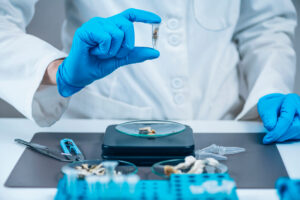
Psilocybin is a naturally occurring compound that, when ingested, is converted by the body into psilocin — a substance that acts primarily on serotonin receptors in the brain, particularly the 5-HT2A receptor. This mechanism produces altered states of consciousness, perception, and cognition that can range from mild to profoundly transformative depending on dose and setting.
Psilocybin currently remains a Schedule I controlled substance under federal law — meaning it is classified as having no accepted medical use and a high potential for abuse. The April 2026 executive order does not change this legal status, but it does direct federal agencies to reduce research barriers, expedite FDA review of promising compounds, and allocate $50 million toward federal-state collaboration on psychedelic research.
Two states — Oregon and Colorado — have moved ahead of federal policy by legalizing supervised psilocybin therapy for adults, and a growing number of clinical trials are underway at major research institutions across the country.
What the Research Shows for Addiction
The most compelling research on psilocybin and addiction has come from a handful of landmark studies at institutions including Johns Hopkins University, New York University, and the University of New Mexico. While the evidence base is still developing and psilocybin-assisted therapy is not yet an approved treatment, the early results across several specific addiction types are generating serious scientific attention.
Alcohol Use Disorder
A randomized controlled trial published in JAMA Psychiatry found promising results — psilocybin-assisted therapy reduced heavy drinking days among participants with alcohol use disorder, though researchers note that larger trials are needed to confirm these findings. — one of the most rigorous studies conducted to date — found that psilocybin-assisted therapy significantly reduced heavy drinking days among participants with alcohol use disorder compared to a control group receiving an active placebo. At the eight-month follow-up, participants in the psilocybin group had reduced their drinking by significantly more than those in the control condition, and a meaningful percentage had stopped drinking entirely.
Researchers theorize that psilocybin may work by interrupting entrenched behavioral patterns through enhanced neuroplasticity — creating what some scientists describe as a “window of opportunity” during which maladaptive habits can be examined and shifted in ways that aren’t accessible through conventional therapy alone.
Tobacco and Nicotine Addiction
A widely cited pilot study from Johns Hopkins found that psilocybin-assisted therapy produced striking abstinence rates among long-term smokers who had tried and failed to quit multiple times through conventional methods. At the six-month follow-up, 80% of participants had maintained abstinence — a rate substantially higher than what is typically seen with other smoking cessation approaches. A larger controlled trial is currently underway.
Opioid Use Disorder
Research into psilocybin for opioid use disorder is at an earlier stage, but active trials are now recruiting. NYU Langone Health launched a Phase 2 trial in late 2025 studying psilocybin as an adjunctive treatment for people with opioid use disorder who continue to use illicit opioids despite adherence to methadone treatment. Results from this trial are expected by 2029. NIDA is also actively funding trials in this area, reflecting growing institutional recognition of psilocybin’s potential across multiple substance use disorders.
How Psilocybin May Work: The Science
Several interconnected mechanisms have been proposed to explain psilocybin’s apparent therapeutic effects in addiction contexts.
Neuroplasticity and pattern interruption. Psilocybin has been shown to promote neuroplasticity — the brain’s ability to form new connections and reorganize existing ones. Addiction is characterized by deeply ingrained neural pathways that drive compulsive behavior. Research suggests psilocybin may temporarily increase the brain’s flexibility, creating conditions in which new patterns of thought and behavior can be established more readily.
The default mode network. Neuroimaging research has found that psilocybin significantly disrupts activity in the brain’s default mode network — the system associated with self-referential thinking, rumination, and the rigid mental narratives that often underlie both addiction and depression. This disruption appears to create space for new perspectives and insights that persist beyond the acute experience.
Mystical experience and psychological insight. Multiple studies have found a correlation between the depth of psychological experience during a psilocybin session — including what researchers describe as “mystical” or transcendent experiences — and positive treatment outcomes. Participants frequently report gaining new perspectives on their relationship with substances, a renewed sense of meaning and connection, and a reduced sense of the psychological grip that addiction had previously held.
Enhanced receptivity to therapy. Psilocybin is not studied as a standalone treatment — it is studied in conjunction with structured psychotherapy before, during, and after the psychedelic experience. The combination appears to be important: psilocybin may increase receptivity to therapeutic insight in ways that amplify the effects of the surrounding clinical work.
Important Caveats: What the Research Doesn’t Yet Show
Intellectual honesty requires being clear about the limitations of the current evidence base.
Most studies are small. While the results from early trials are promising, many of the most cited studies involved relatively small numbers of participants. Larger, more rigorous trials are underway, but the field is still in the process of building the kind of robust evidence base that informs standard clinical practice.
Psilocybin-assisted therapy is not a standalone treatment. Every clinical trial studying psilocybin for addiction embeds the psychedelic experience within a structured therapeutic framework that includes preparation sessions before and integration sessions after. The results cannot be separated from this surrounding clinical context — and psilocybin without therapeutic support is a fundamentally different intervention.
Psilocybin is not approved for addiction treatment. Despite the promising research and the recent federal policy attention, psilocybin remains a Schedule I substance. It is not currently available as a prescribed treatment for addiction anywhere in the United States outside of clinical trials or the two states where supervised therapeutic access has been legalized. The executive order accelerates the path toward approval — it does not create immediate clinical access.
Not everyone is a candidate. Psilocybin carries real risks for certain populations, including people with personal or family history of psychosis or certain other psychiatric conditions. Any future clinical application would require careful screening and medical supervision.
Why This Moment Matters
The April 2026 executive order represents a meaningful federal policy shift — not because it changes the legal status of psilocybin overnight, but because it signals a dramatic change in the federal government’s posture toward psychedelic research. By directing the FDA to fast-track review, allocating dedicated funding, and establishing pathways for eligible patient access to investigational compounds, the order removes barriers that have slowed the pace of research for decades.
The American Psychiatric Association responded to the executive order by welcoming federal investment in psychedelic therapy research, while stating clearly that current scientific evidence is not sufficient to support use of these therapies outside of approved research settings. That measured, evidence-first position reflects the current moment well: the science is promising, the policy environment is shifting rapidly, and the path toward rigorous, evidence-based clinical application is clearer than it has ever been
Evidence-Based Addiction Treatment, Today
Psilocybin-assisted therapy may become an important tool in addiction treatment in the coming years. What is available today — and what research consistently shows produces strong outcomes — is medically supervised detox, residential treatment, evidence-based therapies including CBT and motivational interviewing, and holistic approaches that address the whole person.
At Hygea Health, our Joint Commission-accredited programs in Maryland offer exactly that: individualized, evidence-based addiction treatment that combines clinical rigor with compassionate, whole-person care. We stay current on the evolving landscape of addiction medicine and are committed to offering our patients the most effective, evidence-supported approaches available.
If you or someone you love is ready to take the first step toward recovery, we’re here.
Call Hygea Health at (410) 512-9525 or reach out online — 24 hours a day, seven days a week.
Hygea Health offers medical detox and residential addiction treatment in Maryland, with locations in Middle River, Camp Meade, and Belair.